MACK Tmkl Turn Light 116.TMKL/R
fits make: Mack. year: 1900–2006.
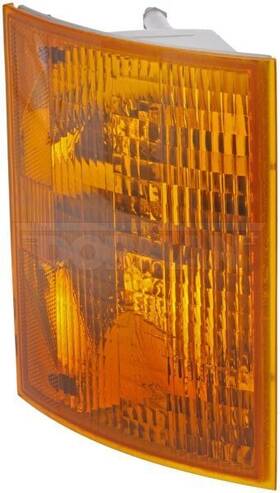
( Part Type: Turn Light ), ( Conditions Options: Lt/rt, Tmk ), ( Genuine Oem: Yes ), ( Ipn: 116.tmkl/r )
Review MACK 116.tmkl/r New Aft Ch Turn Light fits 1900–2006
The **Mack 116.TMKL/R AFT Turn Light** is a robust, high-performance auxiliary turn signal designed specifically for heavy-duty commercial trucks, trailers, and specialized off-road vehicles built between 1990 and 1996. Part of Mack Trucks trusted TMKL series, this rear-mounted turn signal is engineered to meet stringent industry standards for visibility, durability, and reliability in demanding environments. Featuring a **clear, amber-tinted polycarbonate lens**, the light emits a bright, evenly distributed beam that ensures clear visibility during nighttime maneuvers, low-light conditions, or adverse weather, such as rain, fog, or dust. The lens is reinforced with a rugged, impact-resistant material to withstand exposure to road debris, UV degradation, and temperature fluctuations, maintaining optimal clarity over extended periods of use.
The housing of the **Mack 116.TMKL/R** is constructed from a durable, corrosion-resistant metal alloy, often galvanized or coated with a protective finish to prevent rust and extend the component s lifespan in harsh operating conditions. The mounting bracket is designed for seamless integration with the vehicle s chassis, allowing for precise alignment and secure attachment without compromising structural integrity. Inside, the unit houses a **high-efficiency incandescent bulb**, typically a standard 12-volt, 21-watt unit, which provides consistent illumination while operating within the vehicle s electrical system. The internal wiring and connectors are shielded and sealed to prevent moisture ingress, ensuring reliable performance even in wet or dusty environments.
One of the standout features of this turn light is its **modular and replaceable design**, allowing for easy maintenance and bulb replacement without the need for specialized tools. The lens can be quickly unscrewed and removed for cleaning or bulb swaps, reducing downtime and labor costs. Additionally, the **retro-reflective backing** on the lens enhances visibility from the rear, making it a critical safety feature for following drivers in heavy traffic or low-light scenarios. Whether installed on a long-haul semi-truck, a construction vehicle, or a specialized off-road rig, the **Mack 116.TMKL/R** ensures compliance with federal and state traffic regulations while delivering the visibility and reliability drivers depend on.
For fleet managers and truck owners, this turn light represents a balance of **performance, longevity, and ease of maintenance**, making it a cost-effective solution for keeping vehicles road-ready. Its compatibility with Mack Trucks chassis from the late 1980s through the mid-1990s ensures a perfect fit for a wide range of applications, from urban delivery trucks to over-the-road haulers. With proper installation and regular upkeep, the **Mack 116.TMKL/R AFT Turn Light** remains a dependable component that contributes to both safety and operational efficiency on the road.
### Pros and Cons of Buying a Mack Truck (Model 116.TMKL/R AFT 1990-06) with Turn Signal Issues
#### **Pros**
1. **Reliability and Durability** Mack trucks, particularly those from the late 1980s to early 1990s, are known for their robust build quality and heavy-duty engineering. The 116.TMKL/R chassis was designed for long-haul and heavy-duty applications, meaning it can handle demanding conditions if properly maintained.
2. **Strong Resale Value** Mack trucks, especially well-maintained models from this era, retain decent resale value in the commercial trucking market. If you plan to sell or trade it in later, you may still find buyers, particularly in regions where Macks are preferred.
3. **Availability of Parts** While newer models may have more specialized parts, the 116.TMKL/R is still supported by aftermarket and OEM suppliers. Common components like engines, transmissions, and major assemblies are relatively easy to source, though some may require sourcing from specialty dealers.
4. **Proven Engine Options** This model was commonly paired with Mack engines (such as the E7, E7A, or E7B) or other heavy-duty diesel options (e.g., Cummins, Detroit Diesel). These engines are well-documented, and troubleshooting guides, manuals, and repair resources are widely available.
5. **Potential for Customization** If you re looking for a truck for specialized work (e.g., logging, construction, or long-haul with modifications), the 116.TMKL/R chassis can be adapted with aftermarket upgrades, including suspension, brakes, and auxiliary systems.
6. **Lower Purchase Price** Compared to newer models, this truck will likely be significantly cheaper, making it an attractive option for buyers on a budget or those looking for a secondary workhorse.
7. **Established Owner Communities** There are active forums and communities (e.g., Mack Truck Club, diesel trucking groups) where owners share experiences, modifications, and repair tips. This can be invaluable for troubleshooting issues like turn signal problems.
---
#### **Cons**
1. **Aging Electronics and Wiring** Trucks from this era often have outdated electrical systems, including wiring harnesses and relays. Turn signal issues (especially in the rear lights) can stem from corroded connections, failing relays, or degraded wiring. Diagnosing and fixing these problems may require patience and possibly rewiring sections of the harness.
2. **Rust and Structural Wear** Many trucks from this period, especially those exposed to harsh climates, suffer from rust in critical areas like the frame, suspension, and undercarriage. A thorough inspection is essential to avoid hidden structural issues that could lead to costly repairs.
3. **Emissions and Compliance Risks** This truck was not built to meet modern emissions standards (e.g., EPA 2007 or later). If you plan to operate it in areas with strict emissions regulations, you may face challenges with inspections or restrictions. Retrofitting emissions systems (e.g., DEF injectors) can be expensive and may not be worth it for older models.
4. **Driver Comfort and Modern Features** Compared to newer trucks, the 116.TMKL/R lacks modern amenities like advanced telematics, ergonomic cabs, or integrated safety systems (e.g., collision avoidance). If driver comfort and efficiency are priorities, this could be a drawback.
5. **Fuel Efficiency and Cost of Operation** Older diesel engines, even in good condition, are less fuel-efficient than modern counterparts. Fuel costs, maintenance expenses (e.g., oil changes, filter replacements), and potential downtime for repairs can add up over time.
6. **Limited Warranty Coverage** Unless you purchase the truck with a warranty (unlikely for used models), you ll bear the full cost of repairs. Major components like transmissions or engines may require expensive overhauls or replacements if they fail.
7. **Turn Signal Reliability** The specific issue of turn signals (especially rear lights) in this model can be a recurring problem. Common causes include:
- Failed bulbs or sockets.
- Corroded or damaged wiring in the tail light assemblies.
- Faulty flasher relay or turn signal switch.
- Issues with the vehicle s ground connections.
Diagnosing and fixing these problems may require disassembling parts of the truck, which can be time-consuming and labor-intensive.
8. **Driver Training and Familiarity** If your drivers are accustomed to modern trucks with electronic stability control, regenerative braking, or advanced driver aids, transitioning to an older model may require additional training and could increase the risk of accidents due to unfamiliarity with the controls.
---
### **Conclusion**
Buying a 1990-06 Mack 116.TMKL/R with turn signal issues can be a viable option if you prioritize durability, cost-effectiveness, and are prepared for the challenges of maintaining an older vehicle. This truck excels in applications where reliability and heavy-duty performance are more critical than modern conveniences or emissions compliance. However, the turn signal problem (and other potential electrical or structural issues) must be thoroughly investigated and addressed before purchase. If you re willing to invest time and resources into repairs, modifications, and maintenance, this truck can serve as a dependable workhorse. On the other hand, if you seek a low-maintenance, compliant, and efficient vehicle, a newer model may be a better long-term investment.
---
### **Recommendation**
1. **Inspect Thoroughly Before Purchase** Have a trusted mechanic or truck specialist inspect the electrical system, wiring, and turn signal components. Test the rear lights under different conditions (e.g., in the dark, with the engine running) to confirm functionality. Look for signs of rust, corrosion, or physical damage to the wiring harnesses.
2. **Budget for Repairs** Allocate funds for addressing the turn signal issue and any other potential problems (e.g., rust repairs, relay replacements, or wiring rewiring). If the cost of repairs exceeds the truck s value, consider alternatives.
3. **Test Drive and Road Test** Drive the truck on different surfaces and at various speeds to assess its handling, braking, and electrical systems. Pay attention to how the turn signals behave during the test drive.
4. **Consider a Lower-Mileage Example** If possible, opt for a truck with fewer miles or one that has been well-maintained. Lower mileage often correlates with less wear on critical components like the engine, transmission, and suspension.
5. **Evaluate Your Use Case** If you re using the truck for short-haul or local work where emissions compliance isn t an issue, and you re comfortable with older technology, this model could be a good fit. For long-haul or high-mileage applications, weigh the trade-offs carefully.
6. **Explore Alternatives** If the turn signal issue is a dealbreaker or if you re concerned about the truck s overall condition, consider newer used models (e.g., 2010s Mack trucks) that offer better reliability, emissions compliance, and modern features. Alternatively, look for a different make/model with a stronger reputation for electrical reliability.
7. **Join Owner Communities** Engage with Mack truck owners or forums to gather insights on common issues with this model. Their experiences can help you anticipate challenges and make an informed decision.
**Final Verdict**: Purchase the Mack 116.TMKL/R only if you re prepared for the maintenance, potential electrical quirks, and lack of modern amenities. If you re looking for a truck that will require minimal intervention and meet current standards, prioritize a newer or better-maintained model.
Details:
888-5516,LT/RT,CH- 1990 -2006,TMK NEW AFT 1990 06 Mack CH Turn Light 5167617. Labor and costs associated with part installation are not covered under warranty.
part #: 116.tmkl price
- $49.68
specifications tusilap:
- for makes: Mack
- for years: 1900-2006
- part type: Turn Light
- conditions options: Lt/rt, Tmk
- genuine oem: Yes
- ipn: 116.tmkl/r
payments tusilap:
- other
- wallet: Google-pay
- credit card: Diners-club
offer tusilap:
- quantity: 1
- started: May 11, 2026
- options: Ship-to-home
- availability: In Stock
- sold: 0
shipping tusilap:
- service: FedEx Ground / FedEx Home Delivery
- type: Fixed
- cost: $0.00
- class: Standard
- transit: 3-7 Days
- carrier: FedEx
returns tusilap:
- policy: Returns Accepted
- paid by: Seller
- time: 60 Days
seller tusilap:
- # reviews: 50515
- city: Spokane, Washington
- rating: 99.9%
general tusilap:
- Commercial Truck Parts > Lighting > Turn Signals
- condition: Used
Mack 5167617 Is Similar To:
- Mack Msw-4396 Reverse Back Up Light Switch Ref Fuller 22940 1mr2297 Genuine (29% similar) Reverse back up light switch. MSW-4396 ref. Please refer to the photos...(September 26th, 2023)
- Mack 019495474678 Ch600 Headlamp Door Cover New Replacement P n 8895501 (31.7% similar) Items shipped ups ground cannot go to APO/FPO or post office boxes. If you can't find what you re looking for let us do it. Questions, comments or concerns. We'll do our best to find it so you don't have. Product info: new replacement mack CH600 headlamp door cover p/n 889-5501 for sale...(April 25th, 2024)
- Mack 38mo55m Vintage Original Brand Torpedo Bullet Cab Marker Light Housing 10 Inch (30.9% similar) The light is not the original light, it aftermarket. I do not know if the light even works I'm selling this unit for original mac chrome housing but will come with order. Please refer to photos for condition. The housing is in fair shape there are scratches, but no cracks and chips. This is a ...(August 8th, 2024)
- Mack 38m056m 2008-2023 Cxu613 Bulldog Marker Light Lamp Base Pair Oem (31.1% similar) Part #: mack 38M056M for sale...(August 14th, 2024)
- Volvo 1mr4323m3 Mack Fog Light Switch Rocker (24.7% similar) This Volvo mack fog light switch is a reliable and durable option for your commercial truck. It is ideal for use in low light conditions and provides clear visibility safe driving. All parts are working good, taken off from the accident vehicle. The rocker switch is designed for easy use and ...(September 4th, 2024)
- Mack 38m055m Marker Light 759-10724 (43.2% similar) 759-10724 part no. Mack marker light: price:: $50.00: tag no. Items purchased: buyer certifies the item purchased is correct for application...(February 13th, 2025)
- Mack 01066c895a0e 2022 Terrapro Marker Light 759-10586 (39.3% similar) 759-10586 part no. Items purchased: buyer certifies the item purchased is correct for application. Mack terrapin marker light: price:: $27.00: tag no...(February 13th, 2025)
- Mack Le613 2000 Light Bezel 710-10406 (37.8% similar) Items purchased: buyer certifies the item purchased is correct for application. Mack LE613 light bezel: price:: $30.00: tag no...(February 13th, 2025)
- Mack Kd509 New Amber Marker Light Lense For Truck (37.3% similar) Part #: mack KD509 for sale...(March 19th, 2025)
- Mack 2392190 Anthem Stop Turn Tail Lamp 3644824 (38% similar) Cooling system must be properly flushed and filled with new coolant mixture. Or improper maintenance all external causes that can lead to electrolysis and/or corrosion must be verified and eliminated. Failure is caused by or related to a collision, fire, theft, vandalism, riot, explosion, lightning...(April 15th, 2025)
- Mack 2529251 84722510 Anthem Fog Light 3808488 (34.3% similar) Failure is caused by abuse, misuse, or modifications. Our climate control line for industrial and heavy duty vehicles includes radiators, radiator cores, condensers charge air coolers. If you are unsure, ask. Some states do not allow exclusion or limitation of incidental consequential damages, so ...(June 19th, 2025)
