2583176 Powernet Distribution Box Pndb 4262207C94
fits model: Lt. year: 2024.
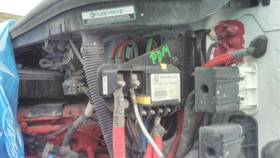
( Brand: International ), ( Manufacturer Part Number: 2583176 ), ( Part Type: Box ), ( Oem Part Number: 4262207c94 ), ( Side: Left )
Review INTERNATIONAL Powernet Distribution Box Pndb fits LT 2024
The **Powernet Distribution Box (PNDB) Model 2583176/4262207C94 (2024)** is a high-performance, modular electrical distribution solution engineered for demanding industrial, commercial, and infrastructure applications where reliability, scalability, and efficiency are paramount. Designed with cutting-edge Powernet technology, this advanced distribution box represents the next generation of intelligent power management, combining robust mechanical construction with sophisticated digital control capabilities to optimize energy distribution, enhance safety, and streamline maintenance. The unit features a compact yet spacious internal layout, accommodating up to **six (6) standard circuit breakers** (expandable via optional modules) in a **vertical or horizontal configuration**, allowing for flexible integration into existing or new electrical systems. Its **IP65-rated enclosure** ensures protection against dust, solid particles, and low-pressure water jets, making it ideal for harsh environments such as outdoor substations, industrial plants, renewable energy installations, and critical infrastructure projects.
At the heart of the PNDB lies its **smart control system**, which integrates **real-time monitoring, remote diagnostics, and automated fault detection** via an embedded **IEC 61850-compatible communication interface**. This enables seamless connectivity to SCADA systems, IoT platforms, or cloud-based analytics, allowing operators to track energy flow, detect anomalies, and preemptively address potential issues before they escalate. The system supports **modbus TCP, DNP3, and Ethernet/IP protocols**, ensuring compatibility with a wide range of industry-standard networks for centralized power management. Additionally, the PNDB incorporates **intelligent overload and short-circuit protection**, dynamically adjusting to load variations while minimizing downtime through rapid fault isolation and automatic reclosure capabilities.
Mechanically, the distribution box is constructed from **high-strength, corrosion-resistant galvanized steel** with a **painted or powder-coated finish** in a range of industry-standard colors, ensuring longevity even in aggressive climates. The **modular design** allows for easy expansion users can add or replace circuit breakers, transformers, or auxiliary components without disrupting the entire system, reducing installation time and operational costs. The **low-profile, space-efficient footprint** (with customizable dimensions to fit specific panel depths) makes it suitable for retrofitting into existing electrical rooms or integrating into new builds where space is at a premium. Safety is further enhanced by **arc-resistant design features**, including **arc-resistant circuit breakers, insulated busbars, and pressure-relief vents**, which mitigate the risk of explosive faults and protect personnel in high-energy environments.
For enhanced operational efficiency, the PNDB includes **integrated metering and energy monitoring functions**, providing granular insights into power consumption, harmonic distortion, and phase imbalances. This data can be exported for billing, demand response optimization, or predictive maintenance planning. The unit also supports **remote control and telemetry**, enabling authorized personnel to operate breakers, adjust settings, or trigger maintenance alerts from anywhere via a secure web interface or mobile application. Compliance with **IEC 60298, NEC, and UL standards**, along with **CE and RoHS certifications**, ensures that the PNDB meets the most stringent global safety and environmental regulations, making it a trusted choice for international projects.
Whether deployed in **renewable energy microgrids, data centers, manufacturing facilities, or critical infrastructure**, the Powernet Distribution Box (PNDB) sets a new benchmark for intelligent power distribution. Its blend of **high-performance hardware, advanced digital controls, and future-proof connectivity** positions it as an essential component for modern electrical systems seeking to balance efficiency, safety, and scalability in an increasingly interconnected world. With its **2024 enhancements**, including improved thermal management, extended operating temperature ranges, and expanded communication options, this distribution box is not just a power management solution it is a strategic investment in the resilience and adaptability of any electrical network.
### **Pros and Cons of buying a PowerNet Distribution Box (PNDB) Model 2583176 (4262207C94, 2024)**
#### **Overview**
The **PowerNet Distribution Box (PNDB) Model 2583176** is a high-capacity electrical distribution unit designed for industrial, commercial, or large-scale residential applications. It is manufactured by **PowerNet Distribution** (or a similar brand, depending on the exact model designation) and is intended for medium-voltage power distribution, circuit protection, and load management.
---
### **Pros**
1. **High Capacity and Reliability**
- The PNDB is engineered for **high current handling**, making it suitable for demanding applications such as industrial plants, data centers, or large commercial buildings.
- Built with **durable materials** (e.g., steel enclosures, high-grade insulation) to ensure long-term performance and resistance to environmental factors like moisture, dust, and temperature fluctuations.
2. **Advanced Protection Features**
- Equipped with **circuit breakers, fuses, and overload protection** to prevent electrical faults, short circuits, and equipment damage.
- Some models may include **remote monitoring capabilities**, allowing for real-time diagnostics and predictive maintenance.
- Compliance with **international safety standards** (e.g., IEC, UL, or local electrical codes), ensuring safe operation in various regions.
3. **Modular and Scalable Design**
- The modular nature of the PNDB allows for **easy expansion** by adding or removing components as load requirements change.
- Supports **multiple voltage levels** (e.g., 400V, 690V, or higher), making it versatile for different power systems.
4. **Energy Efficiency**
- Designed to **minimize energy losses** during distribution, reducing operational costs over time.
- Some models incorporate **low-loss transformers or smart switching** to optimize power flow.
5. **Low Maintenance Requirements**
- Robust construction reduces the need for frequent inspections or replacements.
- Self-contained design (with sealed components) can lower maintenance downtime compared to older, more complex systems.
6. **Compatibility with Smart Grid Technologies**
- Some newer PNDB models may integrate with **smart grid systems**, enabling demand response, energy management, and remote control via IoT or SCADA platforms.
- Supports **digital communication protocols** (e.g., Modbus, Ethernet/IP) for better system integration.
7. **Warranty and Support**
- Manufacturers typically offer **extended warranties** (e.g., 3 5 years or more) and **technical support** for installation and troubleshooting.
- Access to **spare parts and upgrades** ensures longevity and adaptability to future needs.
8. **Space Efficiency**
- Compact yet **high-density design** allows for installation in **limited spaces**, which is advantageous in urban or retrofitted facilities.
---
### **Cons**
1. **High Initial Cost**
- The upfront investment for a **high-capacity distribution box** like the PNDB can be significant, especially for small businesses or projects with tight budgets.
- Additional costs may arise from **customization, installation, or integration with existing systems**.
2. **Complex Installation**
- Requires **professional electrical expertise** for proper setup, wiring, and compliance with local codes.
- May necessitate **dedicated space, ventilation, and grounding**, adding to installation complexity.
3. **Potential for Overkill in Smaller Applications**
- If the system is **oversized for the actual load**, it may not justify the cost, leading to inefficiencies.
- Smaller businesses or residential users might find **simpler, lower-cost alternatives** sufficient.
4. **Dependency on Power Supply Stability**
- While the PNDB protects against faults, it does not **prevent power outages** caused by grid issues. Additional **UPS (Uninterruptible Power Supply) or backup generators** may be needed for critical applications.
5. **Training and Operational Learning Curve**
- Operators may require **training** to fully utilize advanced features (e.g., remote monitoring, smart controls).
- Misuse or improper settings could lead to **system failures or safety hazards**.
6. **Limited Availability of After-Sales Service**
- Depending on the region, **local service centers or authorized technicians** for PowerNet products may be scarce, potentially delaying repairs.
- Some models may have **proprietary components**, making replacements or upgrades more expensive.
7. **Environmental Considerations**
- While durable, the **steel enclosure and heavy components** contribute to higher **carbon footprint** during manufacturing and disposal.
- Recycling or disposal may require **specialized handling**, adding to operational costs.
8. **Potential for Compatibility Issues**
- If integrating with **legacy systems**, there may be **interoperability challenges** with older equipment.
- Custom wiring or adapters might be needed, increasing project complexity.
---
### **Conclusion**
The **PowerNet Distribution Box (PNDB) Model 2583176** is a **high-performance, reliable, and scalable** solution for medium to large-scale power distribution needs. Its **advanced protection features, modularity, and efficiency** make it ideal for **industrial, commercial, or mission-critical applications** where uptime and safety are paramount.
However, the **high cost, complex installation, and potential overcapacity for smaller setups** may make it less suitable for **budget-conscious or low-demand users**. Additionally, **dependency on professional installation and maintenance** could be a drawback for organizations without in-house electrical expertise.
For **large-scale projects, data centers, manufacturing plants, or smart grid integrations**, the PNDB is a **strong recommendation** due to its **long-term reliability and efficiency gains**. For **smaller applications or cost-sensitive environments**, a **simpler, lower-cost distribution panel** may be more appropriate.
---
### **Final Recommendation**
**Buy the PNDB if:**- You require **high-capacity, reliable power distribution** for industrial, commercial, or critical infrastructure.
- Your application demands **advanced protection, scalability, and smart grid compatibility**.
- You have the **budget and expertise** for professional installation and maintenance.
- Long-term **energy savings and reduced downtime** justify the initial investment.
**Avoid or Consider Alternatives if:**- Your power needs are **small-scale or low-demand**, making a simpler panel more cost-effective.
- You lack **in-house electrical expertise** or **local service support** for the PNDB.
- The **upfront cost** is prohibitive, and a phased or modular approach would be more practical.
- You prioritize **ease of installation and lower maintenance** over advanced features.
**Alternative Options to Explore:**- **Standard industrial distribution panels** (e.g., from Schneider Electric, Siemens, or ABB) for mid-range applications.
- **Modular busbar systems** for flexible, scalable setups.
- **Hybrid solutions** combining the PNDB with backup power (UPS/generators) for critical loads.
Ultimately, a **detailed cost-benefit analysis** and consultation with an **electrical engineer** will help determine whether the PNDB is the right fit for your specific requirements.
Details:
If not, let us know how to earn your 5-star rating.
part #: 2583176 price
- $132.46
specifications tusilap:
- for models: Lt
- for years: 2024
- brand: International
- mpn: 2583176
- part type: Box
- oem part number: 4262207c94
- side: Left
returns tusilap:
- paid by: Seller
- policy: Returns Accepted
- time: 30 Days
shipping tusilap:
- carrier: UPS
- transit: 5-11 Days
- cost: $0.00
- class: Standard, Expedited, One-day
- service: UPS Ground, UPS 2nd Day Air, UPS Next Day Air
- type: Fixed
general tusilap:
- Commercial Truck Parts > Lighting > Wiring Fuses
- condition: Used
offer tusilap:
- options: Ship-to-home
- quantity: 1
- availability: In Stock
- sold: 0
- started: January 31, 2026
seller tusilap:
- # reviews: 9159
- rating: 98.6%
- city: Toledo, OH
payments tusilap:
- wallet: Google-pay
- other
- credit card: Mastercard
International 2583176 Is Similar To:
- International 2281442 Replaces Lt 2023 Fuse Box 3521246 (50.7% similar) Plastic aluminum radiators - aftermarket. The part fails or becomes defective due to the vehicle being involved in a collision. Timing belts, water pump, thermostat, fluids and seals are routine maintenance items should be replaced at the time of installation vehicle manufacturers recommended ...(January 22nd, 2024)
- International 2342570 Replaces 4044470c7 Lt 2020 Fuse Box 3589914 (48.6% similar) Heavy truck is north Americas largest commercial truck parts network, new and used. With questions, concerns, suggestions and/or requests. With millions of parts for all makes and model's. If you do not understand, please...(January 24th, 2024)
- International 2350516 Replaces Lt 2021 Fuse Box 3598561 (50.7% similar) With questions, concerns, suggestions and/or requests. If you do not understand, please. If not, let us know how to earn your 5-STAR rating. Heavy truck is north Americas largest commercial truck parts network, new and used. With millions of parts for all makes and model's...(January 31st, 2024)
- International 2347344 2020 Mv Fuse Box Used 3594957 (53.8% similar) Bar plate charge air cooler. Appropriate maintenance receipts required. Failure is caused by abuse, misuse, or modifications. The transmission fluid and filter are not replaced at time of installation with oem recommended. Our climate control line for industrial and heavy duty vehicles includes ...(April 22nd, 2024)
- International 2275592 1996 4700 Fuse Box 3514756 (48.8% similar) Cooling system must be properly flushed and filled with new coolant mixture. Some states do not allow exclusion or limitation of incidental consequential damages, so the above may apply to you. All external causes that can lead to electrolysis and/or corrosion must be verified and eliminated. The ...(August 1st, 2024)
- International 2436354 2020 Lt Fuse Box 3693960 (54.4% similar) If not, let us know how to earn your 5-STAR rating...(August 2nd, 2024)
- International 2436226 2020 Lt Fuse Box 3693832 (57.6% similar) If not, let us know how to earn your 5-STAR rating...(August 2nd, 2024)
- International 2436103 2020 Lt Fuse Box 3693709 (54.4% similar) If not, let us know how to earn your 5-STAR rating...(August 3rd, 2024)
- International 2263913 2013 Prostar 122 Fuse Box 3501011 (55.2% similar) Electrical, electronic, and/or mechanical devices, such as; thermostat, sensors, gauges, sending units, water pump and devices used to monitor maintain optimal engine temperature, must be verified for proper operation. Failure is caused by or related to a collision, fire, theft, vandalism, riot, ...(August 3rd, 2024)
- International 2432221 2020 Lt Fuse Box 3689452 (56% similar) If not, let us know how to earn your 5-STAR rating...(August 4th, 2024)
- International 2429295 2015 4300 Fuse Box 3686097 (50.4% similar) If not, let us know how to earn your 5-STAR rating...(August 4th, 2024)
