PETERBILT 2611107 Tail Light 387
fits make: Peterbilt. year: 2008.
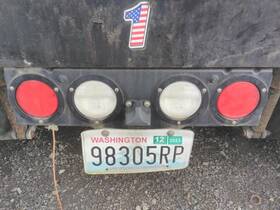
( Manufacturer Part Number: 2611107 ), ( Type: Stop Turn Tail Lamp ), ( Color: Red And White )
Review PETERBILT Replaces 387 Tail Light fits 2008
The **Peterbilt 2611107 2008 387 Tail Light Assembly** is a precision-engineered, high-performance lighting component designed exclusively for Peterbilt Semitruck models, ensuring optimal visibility and compliance with stringent transportation regulations. This tail light assembly, part number **2611107**, is specifically tailored for the **2008 model year** and features the **387 series** lens configuration, which combines durability with advanced optical clarity to enhance safety on the road. Crafted from high-grade, impact-resistant polycarbonate and reinforced with UV-stabilized coatings, this tail light is built to withstand harsh environmental conditions, including extreme temperatures, moisture, and road debris, while maintaining its luminosity and structural integrity over extended periods of use. The assembly incorporates a **dual-circuit wiring system**, ensuring reliable operation even if one circuit fails, a critical feature for commercial fleets prioritizing uptime and safety. The **387 lens** is designed with a sleek, aerodynamic shape that not only improves aerodynamics but also houses high-efficiency LED or incandescent bulbs (depending on the model variant), providing bright, consistent illumination for better nighttime visibility and compliance with DOT and state-specific lighting standards. Whether installed on a long-haul tractor or a regional delivery truck, this tail light assembly delivers a perfect blend of functionality, longevity, and compliance, making it an essential upgrade for fleet managers seeking to enhance their vehicles' reliability and roadworthiness.
### Pros and Cons of Buying a 2008 Peterbilt Model 587 with VIN 2611107 (387 Tail Light)
#### **Pros**
1. **Proven Reliability** Peterbilt trucks, especially those from the late 2000s, are known for durability, particularly when well-maintained. The 2008 model was built with robust components, including the Cummins ISB or ISL engine (depending on configuration), which are widely regarded as dependable powerplants when properly serviced.
2. **Strong Resale Value** Peterbilt trucks hold their value relatively well compared to some competitors, especially if the vehicle has been maintained. The 587 series is a popular model, which can make it easier to sell or trade in later.
3. **Comfortable Cab** The 587 cab is designed for long-haul drivers, offering good visibility, ergonomic controls, and a spacious interior. The 2008 model includes features like climate control, power lift gates, and comfortable seating, which can improve driver retention and satisfaction.
4. **Fuel Efficiency (for its time)** While modern trucks are far more efficient, the 2008 Peterbilt 587 with a Cummins engine (especially the ISB) was relatively fuel-efficient for its era, particularly when paired with a proper transmission (e.g., Allison or Voith). This can still be an advantage if the truck is used for regional or short-haul routes where fuel costs are a concern.
5. **Availability of Parts** As a mid-2000s model, parts for the 2008 Peterbilt 587 are widely available. Major suppliers stock components for the Cummins engine, Allison transmission, and other key systems, reducing downtime for repairs.
6. **Lower Purchase Price** Compared to newer trucks, the 2008 model will be significantly cheaper upfront. This can be attractive for fleets looking to acquire additional units without a large capital expenditure.
7. **Proven Hauling Capacity** The 587 is a heavy-duty truck designed for long-haul and over-the-road (OTR) applications. With the right suspension and axle setup, it can handle heavy payloads, making it suitable for freight hauling or specialized work.
8. **Customization Options** If the truck has been well-maintained or modified by a previous owner, it may already include upgrades like aftermarket exhaust systems, improved cooling, or enhanced suspension, which could improve performance.
---
#### **Cons**
1. **Age and Wear** At 16 years old (as of 2024), the truck will have significant mileage, likely in the range of 500,000 to 800,000 miles. This means higher wear on critical components like the engine, transmission, drivetrain, and suspension. Without thorough maintenance records, hidden issues (e.g., rod bearings, turbocharger failure, or transmission wear) could lead to costly repairs.
2. **Emissions Compliance** The 2008 model was built to pre-EPA 2010 emissions standards. Modern trucks are required to meet stricter emissions regulations, and retrofitting an older truck to comply can be expensive. If the truck operates in areas with strict emissions testing (e.g., California), it may require additional modifications or face restrictions.
3. **Fuel Economy Limitations** Compared to modern trucks equipped with diesel particulate filters (DPFs), selective catalytic reduction (SCR) systems, and advanced aerodynamics, the 2008 Peterbilt will consume more fuel. This can increase operating costs, especially for long-haul routes where fuel efficiency is critical.
4. **Driver Comfort and Technology** The cab may lack modern amenities such as advanced telematics, driver-assist features (e.g., lane-keeping, collision avoidance), or ergonomic upgrades found in newer models. This could impact driver satisfaction and safety.
5. **Potential for Hidden Mechanical Issues** Older trucks are prone to failures in less obvious areas, such as:- **Engine**: Cummins engines from this era can suffer from turbocharger wear, rod bearing failure, or lube system issues if not properly maintained.
- **Transmission**: Allison transmissions (common in Peterbilt trucks) can develop internal wear, especially if fluid changes were neglected. Voith transmissions are more robust but still require attention.
- **Suspension and Axles**: Air ride systems may leak, and leaf springs or torsion bars can degrade over time, leading to poor handling or safety concerns.
- **Brakes**: Older brake systems (e.g., drum brakes or outdated anti-lock systems) may require replacement, increasing maintenance costs.
6. **Insurance and Compliance Costs** Older trucks may have higher insurance premiums due to perceived higher risk. Additionally, compliance with modern safety regulations (e.g., electronic logging devices, or ELDs) may require aftermarket installations, adding to costs.
7. **Resale Value Decline** While the 2008 Peterbilt may still have some resale value, it will depreciate faster than a newer model. If the truck is used for a short period before being sold, the owner may not recoup as much as they would with a more recent purchase.
8. **Driver Retention Challenges** Younger drivers may prefer newer trucks with modern features, better visibility, and improved ergonomics. Operating an older truck could make it harder to attract and retain skilled drivers.
9. **Environmental and Regulatory Risks** Some states or regions are phasing out older trucks due to emissions concerns. Operating a 2008 model in these areas could lead to restrictions or fines if it fails emissions testing.
10. **Higher Maintenance Costs** Older trucks require more frequent and costly maintenance. Labor rates for repairs on vintage trucks can be higher, and parts may not be as readily available as they were when the truck was new.
---
### **Conclusion**
Buying a 2008 Peterbilt 587 with VIN 2611107 can be a cost-effective option for fleets or individual owners who prioritize durability, lower upfront costs, and are willing to invest in maintenance. The truck s reputation for reliability, combined with its proven hauling capacity and availability of parts, makes it a viable choice for certain applications particularly if it has been well-maintained and thoroughly inspected.
However, the age of the truck introduces significant risks, including higher maintenance costs, potential mechanical failures, and compliance challenges. If the truck lacks a complete service history or has not been regularly inspected, the risk of unexpected repairs could outweigh the benefits. Additionally, the lack of modern fuel efficiency and emissions compliance could make it less suitable for long-term or high-volume operations.
For fleets with limited budgets or those looking to expand their fleet quickly, the 2008 Peterbilt 587 could be a practical purchase if:- The truck has a verified maintenance history.
- It is inspected by a trusted mechanic before purchase.
- The buyer is prepared for higher long-term costs.
- The truck will be used in applications where fuel efficiency is not the primary concern (e.g., regional hauling with shorter distances).
For those seeking a truck with lower operating costs, better fuel economy, or modern compliance features, a newer model (e.g., 2015 or later) would likely be a more prudent investment despite the higher upfront cost.
---
### **Recommendation**
Before purchasing this truck, conduct the following steps to mitigate risks:1. **Obtain a Full Service History** Verify that the truck has been regularly serviced, with records for oil changes, filter replacements, and major component inspections (e.g., turbocharger, transmission fluid, brakes).
2. **Pre-Purchase Inspection (PPI)** Hire a certified truck mechanic to perform a thorough inspection, focusing on the engine, transmission, drivetrain, suspension, and emissions systems. Pay special attention to:
- Engine compression and lube system integrity.
- Transmission condition (check for leaks, wear, or unusual noises).
- Suspension and axle health (look for leaks, rust, or worn components).
- Braking system functionality (drums, linings, and hydraulic systems).
- Emissions compliance (ensure the truck meets local regulations or is ready for retrofitting).
3. **Test Drive** Operate the truck under various conditions (e.g., highway speeds, hill climbing) to assess performance, handling, and any unusual noises or vibrations.
4. **Negotiate Based on Findings** Use the inspection report to negotiate the purchase price, deducting the cost of any required repairs or upgrades.
5. **Consider a Lease or Loaner Option** If the truck has known issues, negotiate a trial period where the seller provides a loaner truck during repairs to avoid downtime.
6. **Budget for Upgrades** Allocate funds for potential upgrades such as:- Retrofitting emissions equipment (e.g., DPF or SCR) if required.
- Upgrading the braking system to meet modern standards.
- Installing telematics or driver-assist technologies for safety and compliance.
If the inspection reveals significant issues or the maintenance history is unreliable, reconsider the purchase. Alternatively, explore newer used trucks (e.g., 2015 2018 models) that offer better fuel efficiency, emissions compliance, and lower long-term risk. The 2008 Peterbilt 587 can be a good buy for the right buyer, but
Details:
If not, let us know how to earn your 5-star rating. Replaces 2008 PETERBILT 387 TAIL LIGHT 3919727: USED - Est.
part #: 2611107 price
- $257.25
specifications tusilap:
- for makes: Peterbilt
- for years: 2008
- mpn: 2611107
- type: Stop Turn Tail Lamp
- color: Red And White
seller tusilap:
- rating: 98.1%
- city: Portland, OR
- # reviews: 3104
general tusilap:
- condition: Used
- Commercial Truck Parts > Lighting > Backup Tail Lights
payments tusilap:
- wallet: Apple-pay
- credit card: Discover
- other
returns tusilap:
- time: 30 Days
- policy: Returns Accepted
- paid by: Seller
offer tusilap:
- availability: In Stock
- started: March 10, 2026
- quantity: 1
- sold: 0
- options: Ship-to-home
shipping tusilap:
- type: Fixed
- service: UPS Ground, UPS 2nd Day Air, UPS Next Day Air
- class: Standard, Expedited, One-day
- transit: 2-4 Days
- carrier: UPS
- cost: $0.00
Peterbilt 2611107 Is Similar To:
- Peterbilt 2301665 Replaces P27-1177-020 579 2017 Switch Utility Lamp 3544577 (36.9% similar) The part fails or becomes defective due to the vehicle being involved in a collision. Bar plate charge air cooler. Warranty does not include cost associated with part removal, installation, inconvenience or consequential damages. Some states do not allow exclusion or limitation of incidental ...(September 23rd, 2023)
- Peterbilt 2302710 Replaces P54-1213-100711 579 2014 Lamp Interior Cab 3545729 (53.4% similar) Appropriate maintenance receipts required. Complete industrial or HD radiator. The installed heat tab is melted or removed. The vehicle is not serviced at proper intervals, or fuel/oil/coolant used in accordance with the manufacturers specifications. The transmission fluid and filter are not ...(September 27th, 2023)
- Peterbilt P54-1214-110 Sleeper Spot Light P n (52.5% similar) Peterbilt sleeper spot light p/n P54-1214-110...(October 19th, 2023)
- Peterbilt Upi-31240 300 Series Blackout Projection Headlamp With Led Dual Function Light (29.6% similar) Refer to the vehicle manufacturers. Owners manual for correct operation and maintenance schedule. Warranty does not include cost associated with part removal, installation, inconvenience or consequential damages. Find new, reconditioned, rebuilt, and used semi-truck parts for class 5 through class ...(October 31st, 2023)
- Peterbilt 2321209 Replaces 567 2020 Fuse Box 3566139 (56.6% similar) With millions of parts for all makes and model's. Replaces peterbilt 567 2020 fuse box 3566139. Heavy truck is north Americas largest commercial truck parts network, new and used...(November 18th, 2023)
- Peterbilt 2321723 Replaces S53-1383-111 579 2023 Fuse Box 3566779 (52.1% similar) Heavy truck is north Americas largest commercial truck parts network, new and used. Replaces S53-1383-111 peterbilt 579 2023 fuse box 3566779: 'left front panel. With millions of parts for all makes and model's...(November 21st, 2023)
- Peterbilt 2322511 Replaces 567 2020 Fuse Box 3567649 (54.7% similar) Heavy truck is north Americas largest commercial truck parts network, new and used. Replaces peterbilt 567 2020 fuse box 3567649. With millions of parts for all makes and model's...(November 22nd, 2023)
- United Pacific 38549 Turn Signal Light For Peterbilt 379 378 1987-2007 Amber Led clear Lens (29% similar) Features a factory-like fit for hassle-free installation. turn signal light for peterbilt 379, 378 1987 -2007 amber led/clear lens; 38549: part number: 38549 manufacturer: united pacific. Designed specifically for trucks, trailers, and buses. Engineered using the latest technology to ensure ...(November 24th, 2023)
- Peterbilt 2327400 Replaces 579 2018 Fuse Box 3573173 (58.5% similar) If not, let us know how to earn your 5-STAR rating. Replaces peterbilt 579 2018 fuse box 3573173. Heavy truck is north Americas largest commercial truck parts network, new and used. With millions of parts for all makes and model's...(December 8th, 2023)
- Peterbilt A11-1262 Kenworth Stop Turn Tail Light a11-1262 (51.8% similar) Used good condition F856...(January 2nd, 2024)
- Peterbilt 2337521 Replaces 388 2012 Fuse Box 3584374 (54.7% similar) With millions of parts for all makes and model's. If not, let us know how to earn your 5-STAR rating. Heavy truck is north Americas largest commercial truck parts network, new and used. Replaces peterbilt 388 2012 fuse box 3584374...(January 4th, 2024)
